
A woman confronted her boyfriend’s mother after she repeatedly asked her son for money, even during a joint birthday celebration. What began as an ongoing financial strain quietly simmering in the background finally boiled over when the mother-in-law brought up her monthly allowance request once again, this time implying that 50€ should mean nothing to her sons.
The couple, both working steady but modest jobs, had already been contributing regularly to the mother’s expenses. Still, the requests never seemed to stop. When the mother compared her situation to going hungry and attempted to guilt her son on his birthday, his partner decided to speak up. The confrontation has now led to her being banned from the family entirely.

‘AITA for telling my MIL that it is inappropriate to keep asking her son for money?’
From the very beginning, money was always part of the relationship.





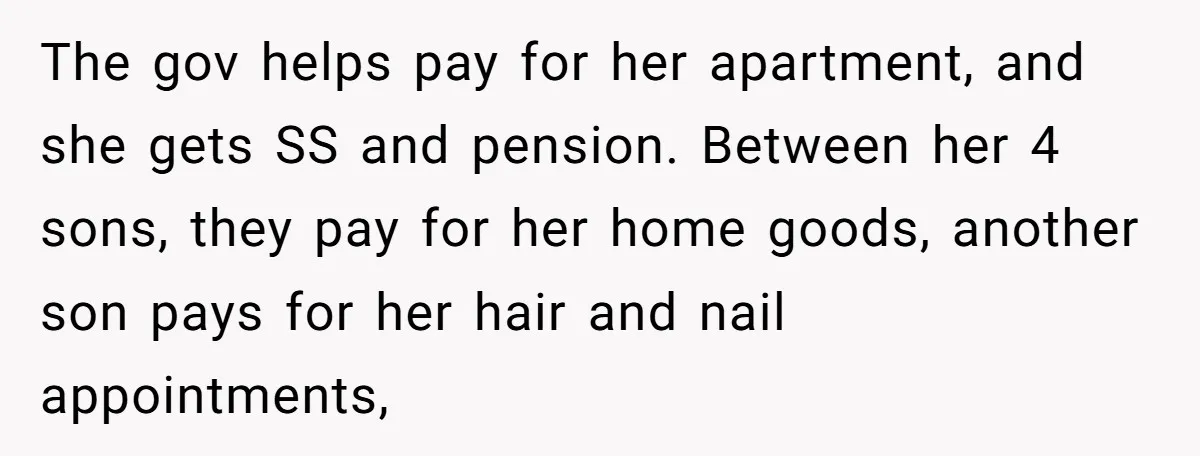

The birthday dinner quickly shifted from celebration to confrontation.




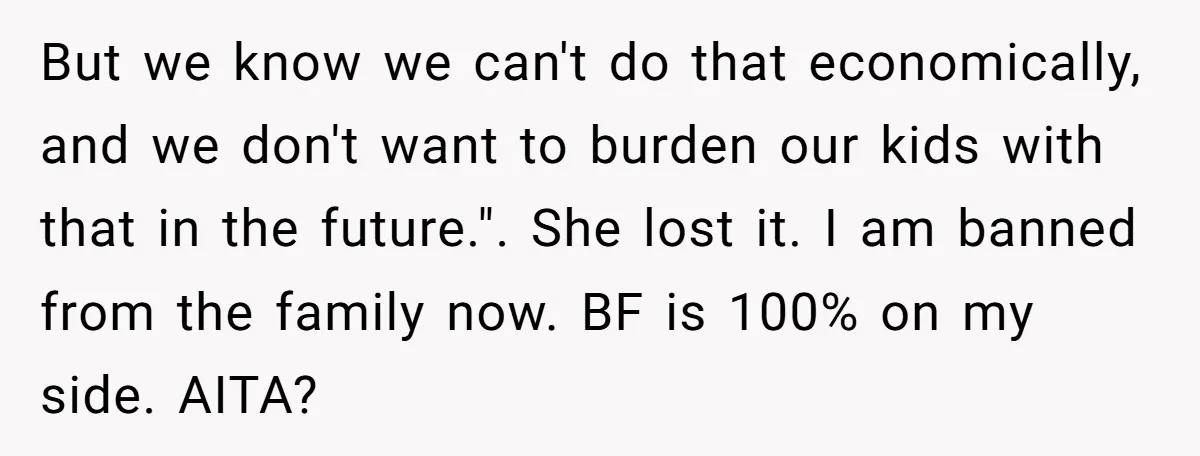
The poster finally decided to respond to the guilt.
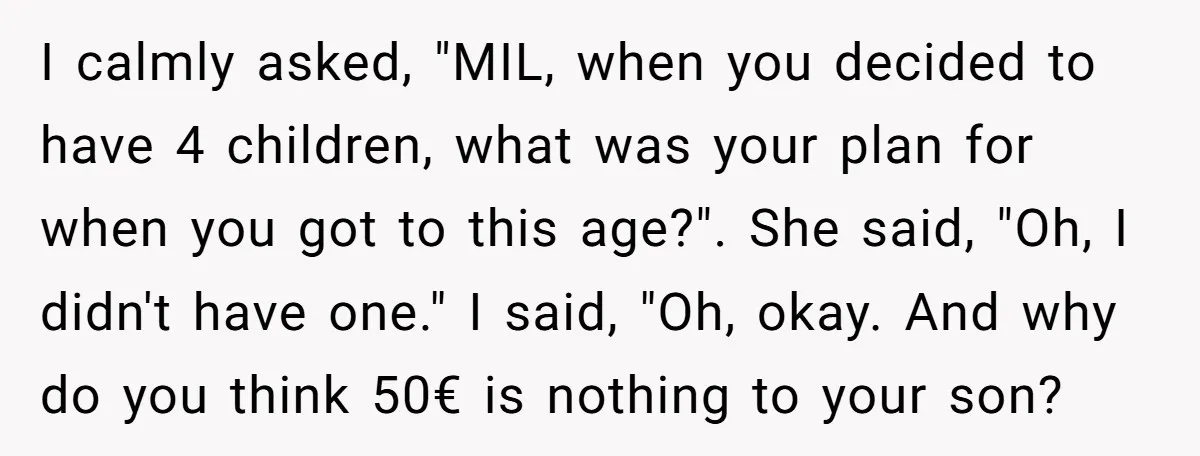



In this case, the central issue is not whether helping a parent is wrong, but whether repeated financial demands cross into entitlement. The mother-in-law receives government support, pension, and contributions from all four sons, yet she continues to push for a structured monthly allowance. From her perspective, the extra 50€ from each child may represent security or comfort. From the couple’s perspective, it represents delayed plans for their own financial stability and future family.
There is also the emotional timing to consider. Bringing up money during her son’s birthday celebration shifts the focus from appreciation to obligation. That dynamic can create resentment, especially when the adult child already contributes consistently. On the other hand, some cultural frameworks encourage children to financially support parents in retirement, and expectations may differ widely between families.
Ultimately, the broader social question revolves around planning, accountability, and intergenerational responsibility. Adult children often feel torn between loyalty to parents and building independent futures. When financial help becomes expected rather than appreciated, conflict becomes almost inevitable.
Here’s how people reacted to the post:
Many users strongly supported the poster’s decision to speak up.








Others offered more balanced takes, suggesting boundaries should come from the son.







A few users lightened the mood with blunt humor.




This story highlights the tension that can build when financial help turns into expectation. The poster questioned whether adult children should serve as a retirement plan, while the mother-in-law appeared to believe regular support was justified. The disagreement ultimately led to a family rift, though the boyfriend supported his partner’s stance.
Should adult children be responsible for supplementing a parent’s retirement income? Where is the line between generosity and obligation? And who should set those boundaries within a relationship? Share your thoughts and experiences.