
We all know that moment when a long-avoided responsibility finally catches up with someone. For one mother, her ex-husband’s overdue financial accountability arrived with a surprising demand: he wanted a full refund.
After years of dodging the system by working under the table, the father finally landed a legitimate job—only to see his wages immediately garnished for child support. Instead of accepting the court’s decision, he argued that his wealthy estranged parents, who generously provided a home for his ex and their child, had already covered his tab. This created a bizarre tug-of-war over who truly owed what to the child. Curious how this family drama unfolded? The original post tells it all below.


The reality of formal employment brought an immediate, unavoidable consequence.
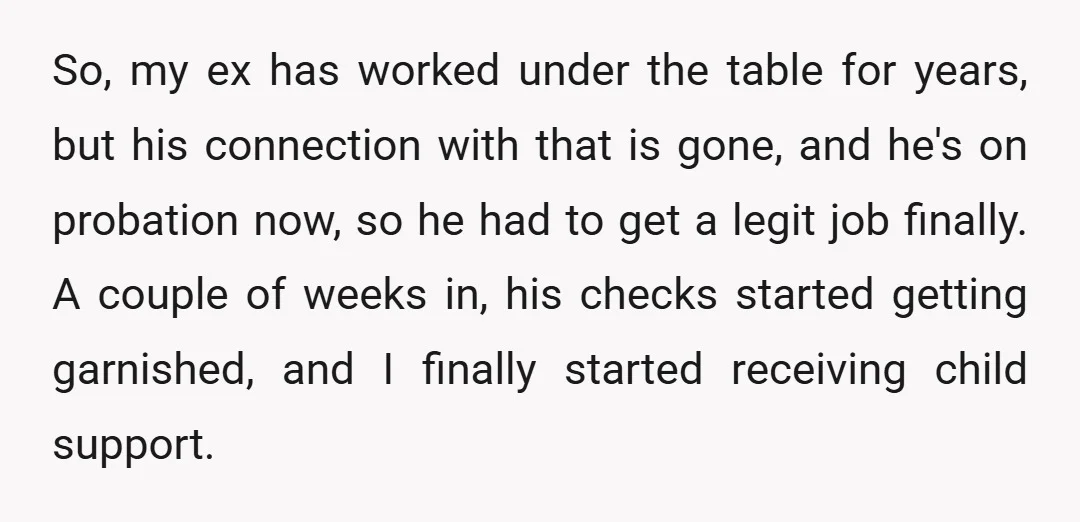

The generational rift left the ex looking from the outside in.


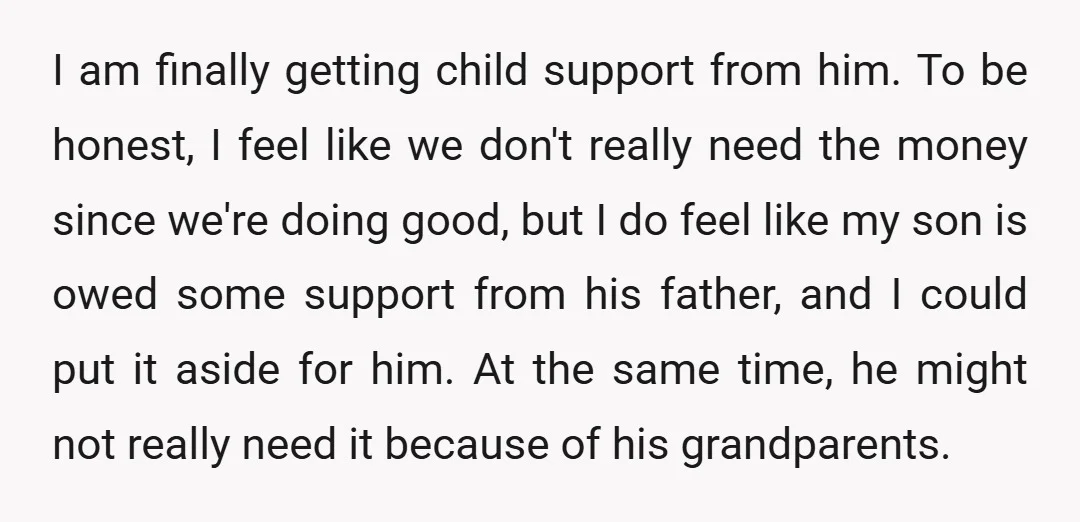

The father’s attempt to use his estranged parents’ generosity as a legal loophole points to a much broader cultural issue of child support evasion.
While exact statistics on deliberate under-the-table work to avoid payments are notoriously difficult to track, the underlying motivation is common. Legal professionals frequently encounter parents who view their financial duty as a penalty rather than a fundamental necessity. A parent’s financial obligation is a continuous legal responsibility that exists entirely independent of any extended family dynamics. A grandparent’s voluntary gift—even one as substantial as free housing—does not erase or offset a biological father’s legal mandate.
Furthermore, avoiding this financial responsibility often stems from a misplaced sense of victimhood. The father in this scenario perceives the garnished wages as an unfair transfer of wealth to his ex, completely missing the psychological and economic reality that the money belongs solely to his son. The courts have already validated this boundary, separating the grandparents’ goodwill from the father’s debt.
For parents navigating a sudden influx of previously unpaid support, the most secure path forward is to funnel those funds directly into a dedicated savings account. Whether used for future education, a first car, or unexpected medical needs, preserving the money ensures the child receives what they are legally owed. If the father truly believes the arrangement is unjust, his only legitimate recourse is to petition the court, rather than demanding informal kickbacks from his ex.
This situation presents a complex web of legal obligations and family dynamics, highlighting how financial responsibilities cannot simply be passed off onto wealthy relatives. Do you think the mother should keep the money for her son’s future, or should she return it considering the father’s new financial struggles? And how much should the grandparents’ generosity factor into the legal equation? Share your thoughts below!
Community Opinions
Reddit came in hot—nearly unanimous in their verdict, with a vocal majority urging the mother to protect the funds.
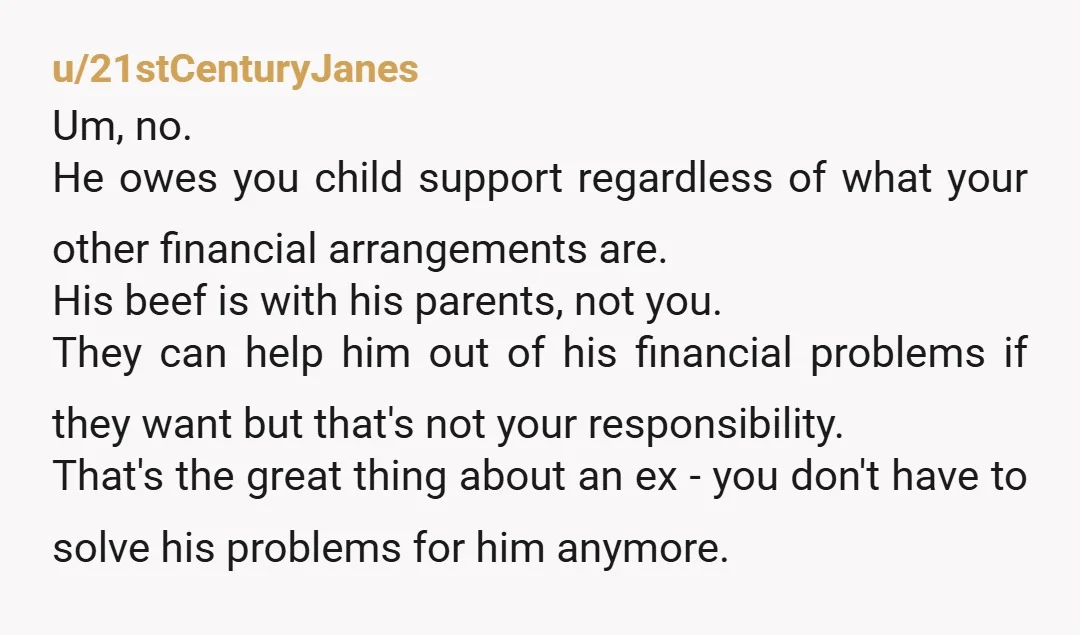














And a few reminded everyone that financial security can vanish overnight, making the legal support essential.
This story illustrates how complicated family dynamics can become when money and estranged relatives are involved. While the mother feels financially secure now, the future remains unwritten, and the child’s legal right to paternal support remains absolute.
Do you think the mother should keep the funds for her son, or did the ex have a valid point about his parents’ contributions? And how would you handle a sudden influx of back-paid child support?
Share your hot take below!