
A tenant living in an apartment building suddenly found themselves in the middle of a strange financial dilemma. For months, the building’s cleaning lady had stopped cleaning their floor due to a dispute between the apartment superintendent and one of the neighbors. During that time, the tenant and a neighbor handled the cleaning themselves while the superintendent clearly said there was no need to continue paying the cleaning fee.
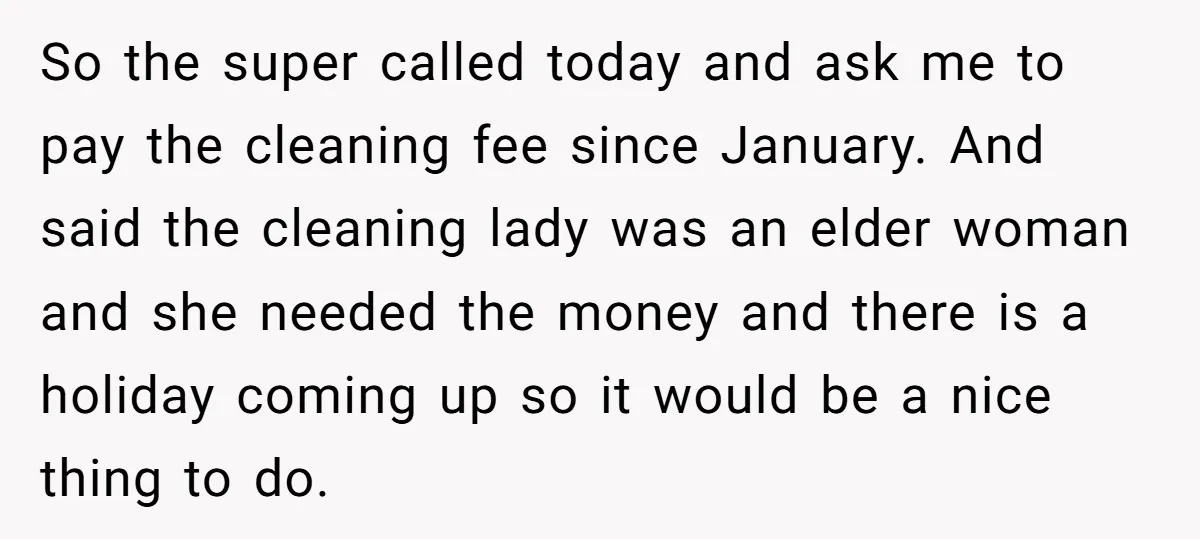
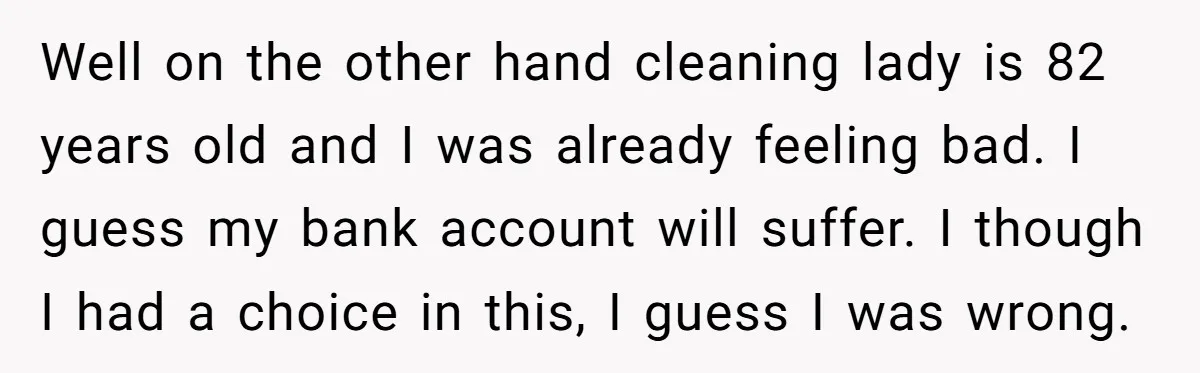
Months later, the situation took an unexpected turn. The superintendent called again and asked the tenant to pay the cleaning fees retroactively, arguing that the elderly cleaner needed the money and the holidays were approaching. While the tenant sympathized with the cleaner’s situation, their own financial struggles made the request difficult. Now caught between pressure from management, potential backlash from neighbors, and their own limited budget, the tenant turned to a social network asking whether refusing to pay would make them the villain.

‘WIBTA If I don’t pay the cleaning lady?’
The tenant explained how the cleaning arrangement in the building suddenly changed.
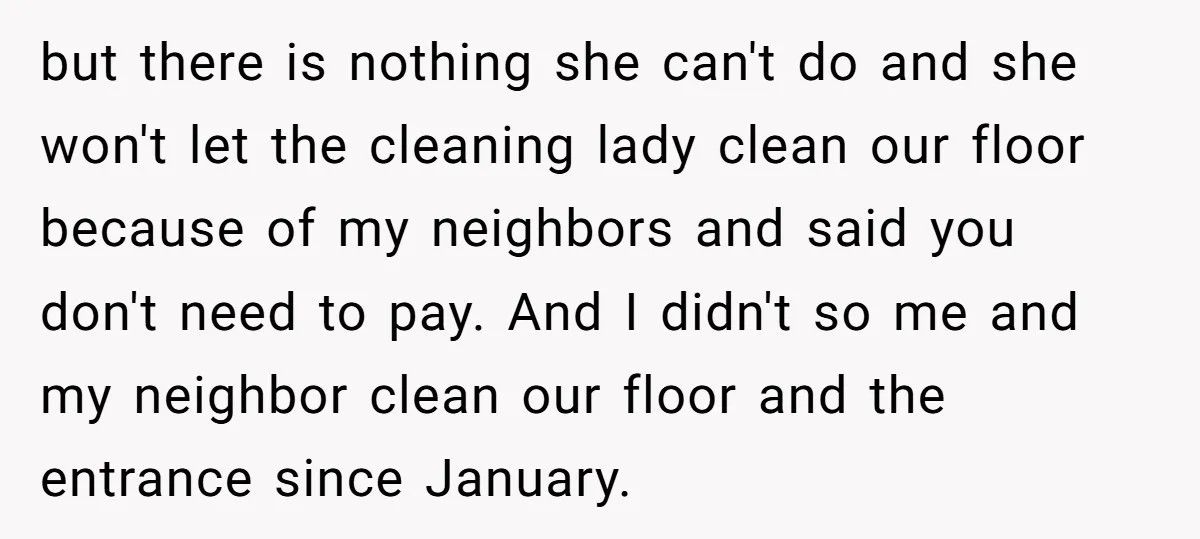
Months later, the superintendent returned with a surprising request for payment.
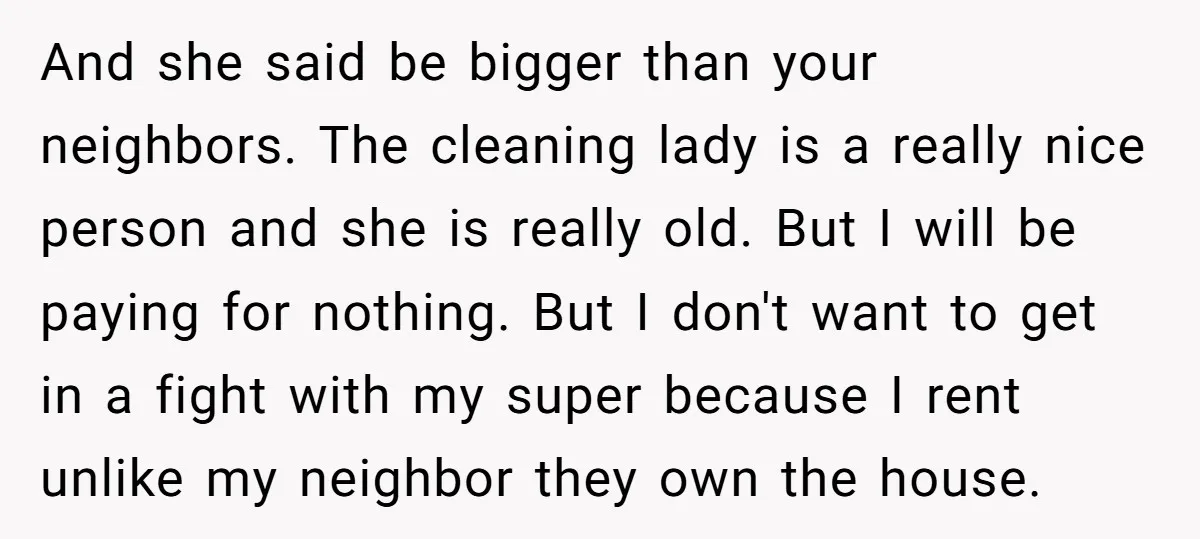
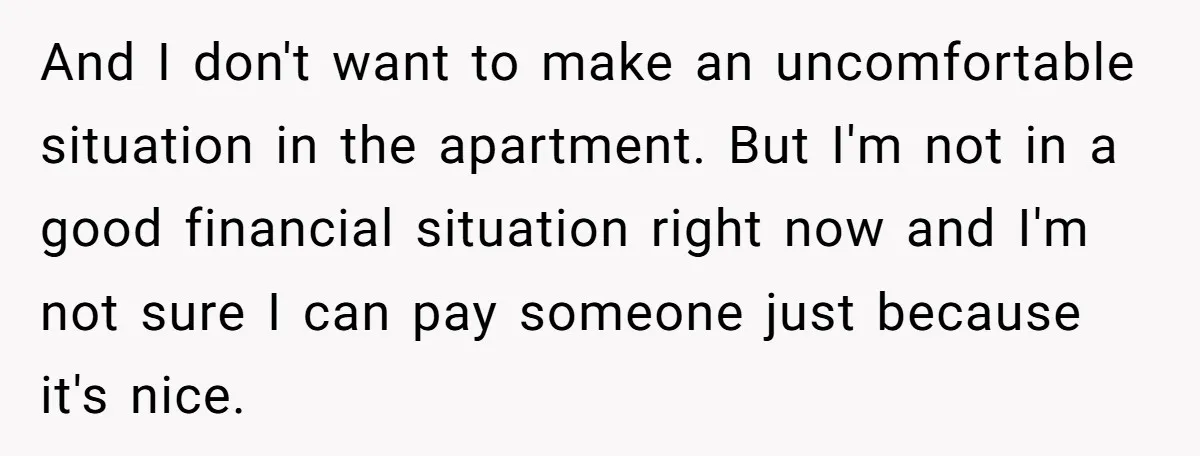
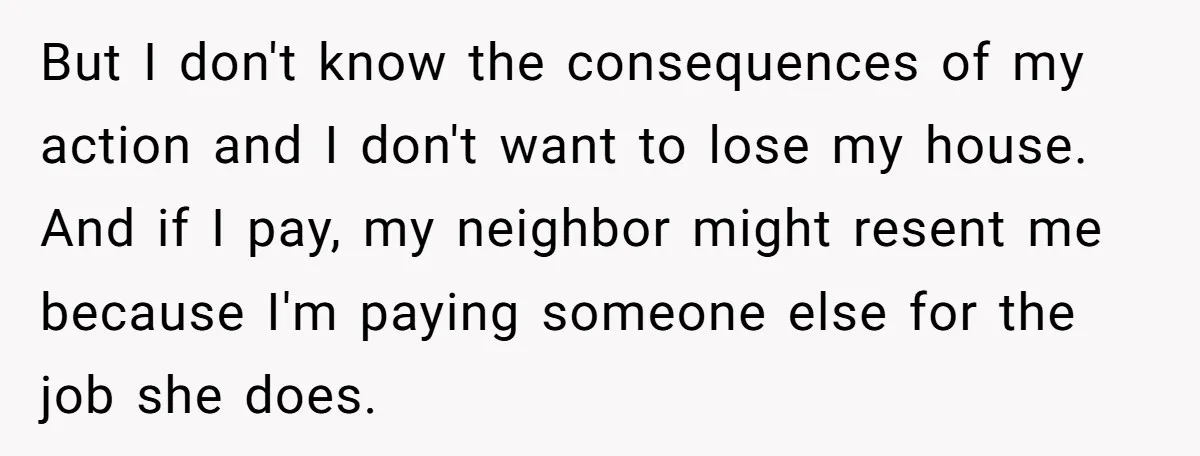
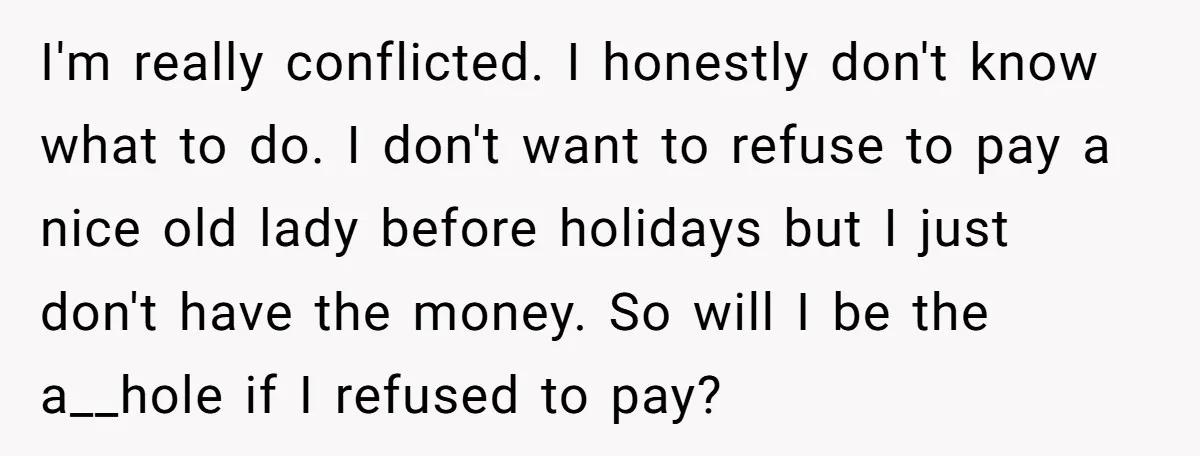
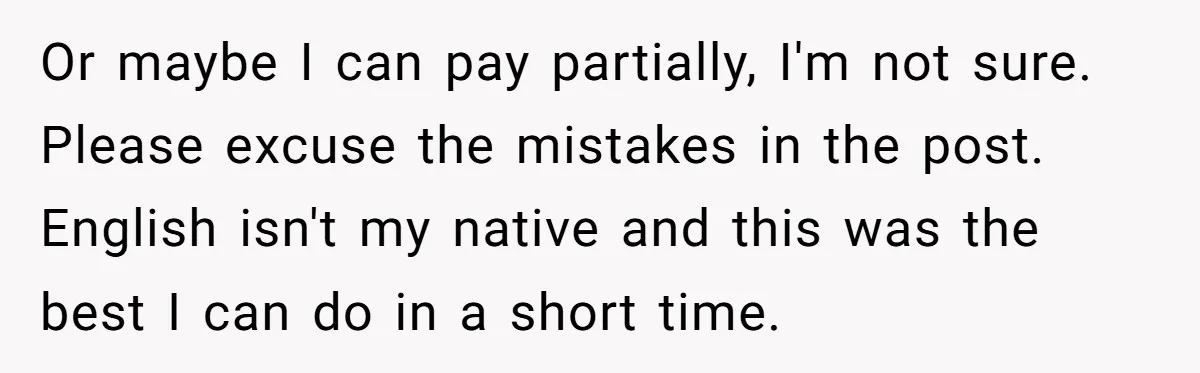
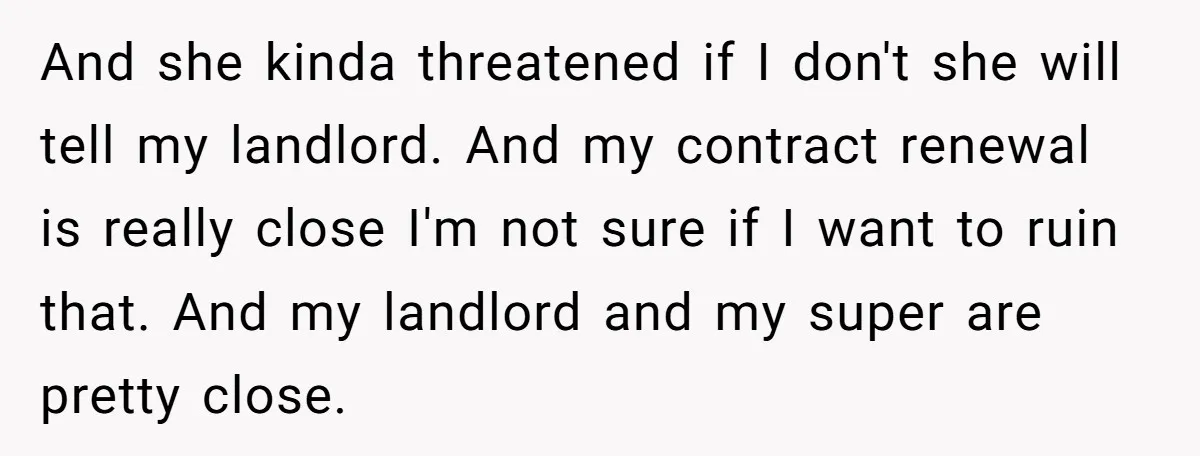
The situation escalated when the superintendent hinted at consequences, and neighbors got involved.
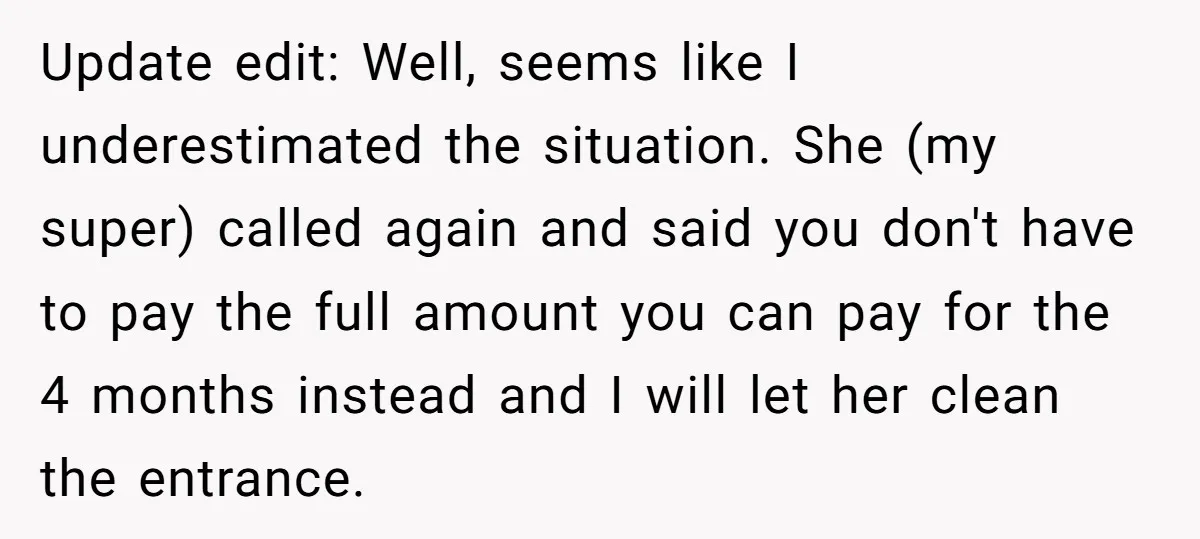
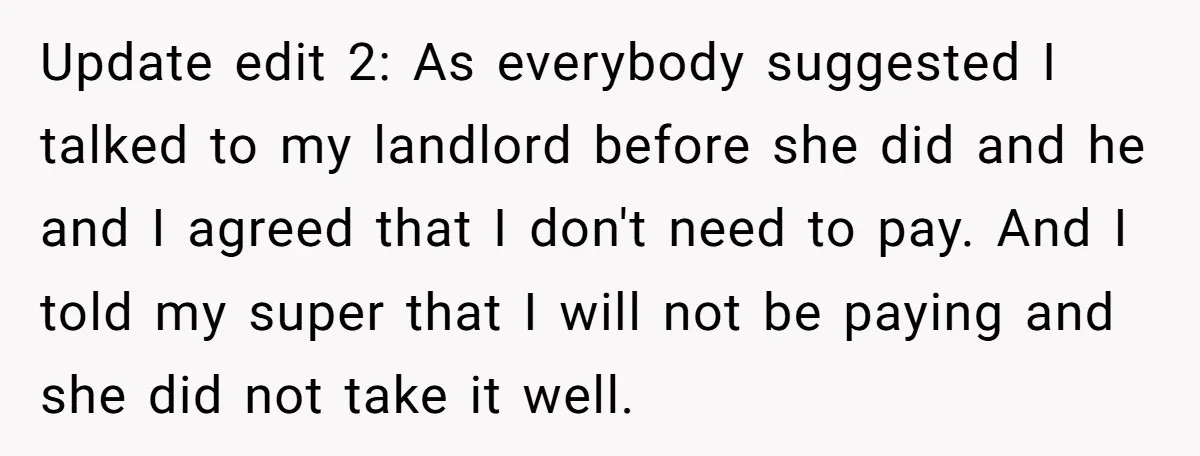
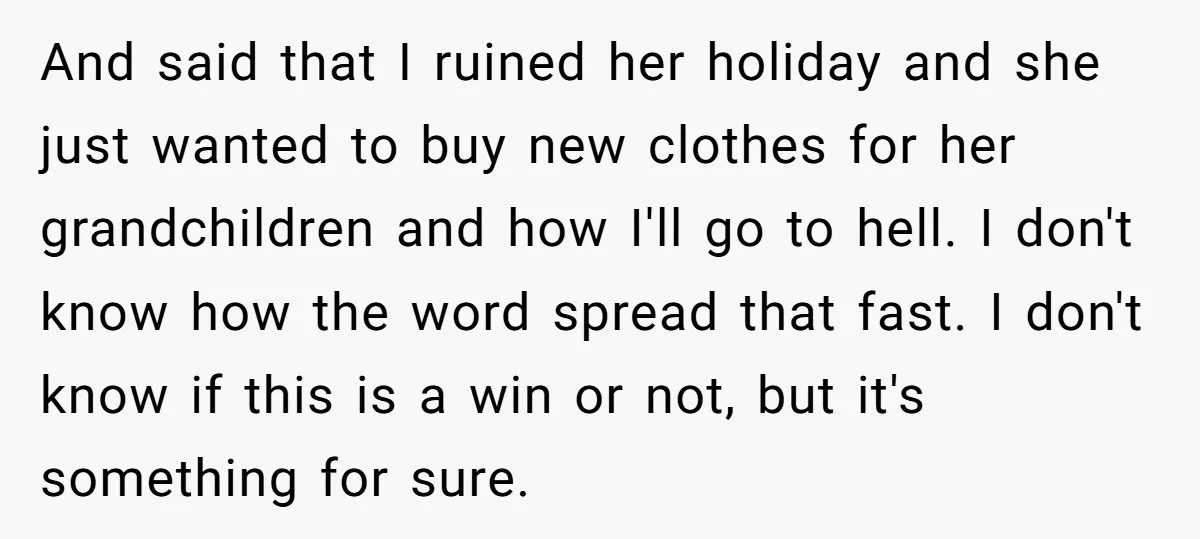
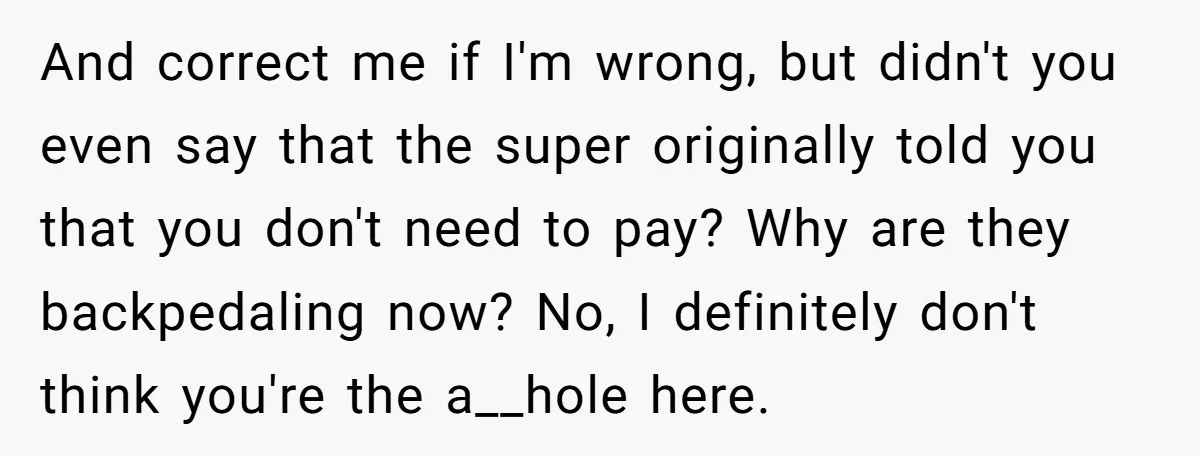
From a practical perspective, payment for services usually follows a simple rule: if the service is not provided, payment is not required. In this case, the superintendent explicitly told the tenant that the cleaning lady would not clean their floor and that payment was unnecessary. For several months, the tenant and a neighbor handled the cleaning themselves. Requesting retroactive payment later changes the nature of the agreement and creates confusion about responsibility.
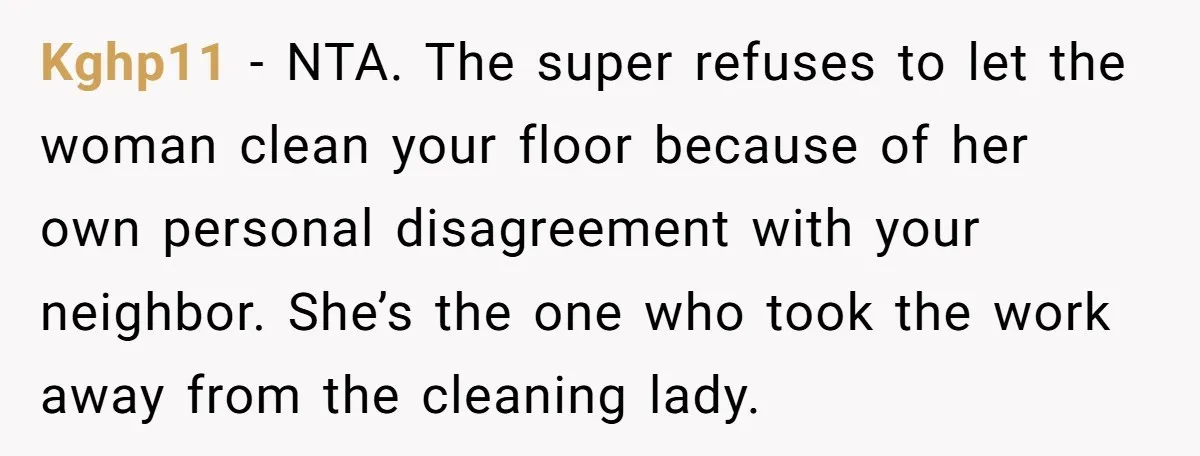
Another angle involves the emotional element introduced by the superintendent. Mentioning the cleaner’s age and financial needs shifts the situation from a service arrangement into a moral appeal. While compassion for an elderly worker is understandable, experts often note that financial responsibility for employees typically lies with whoever manages or hires them. Asking residents to compensate for lost work due to management decisions can create unfair pressure.
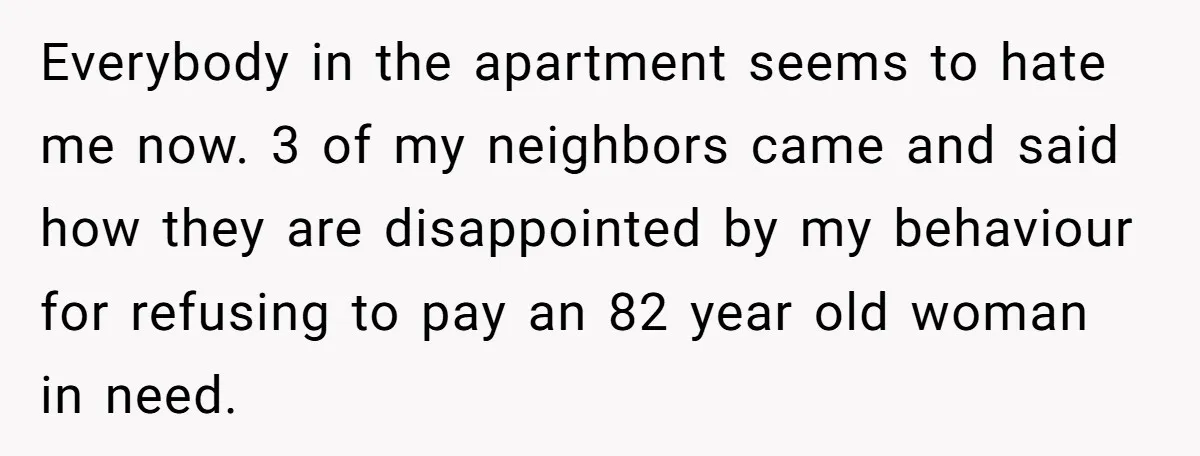
There is also a broader social dynamic at play. In shared living spaces, reputation and relationships with neighbors can influence decisions just as much as contracts or policies. The tenant feared conflict with both building management and fellow residents. Situations like this often demonstrate how quickly community judgment can form, even when the original dispute stems from management decisions rather than the tenant’s actions.
Here’s what people had to say to OP:
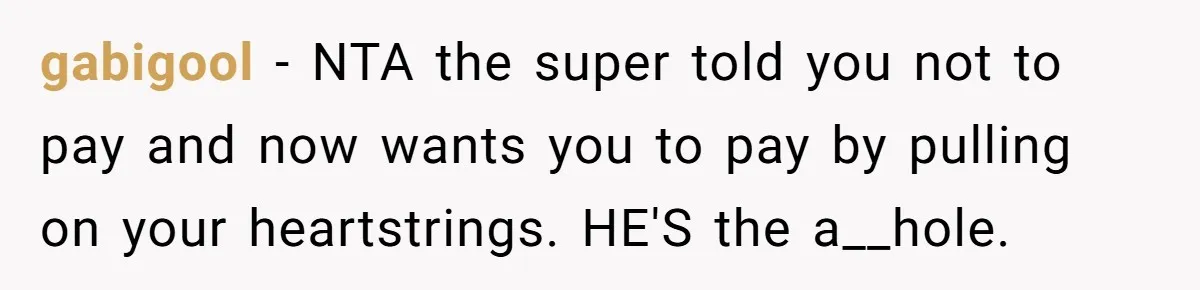
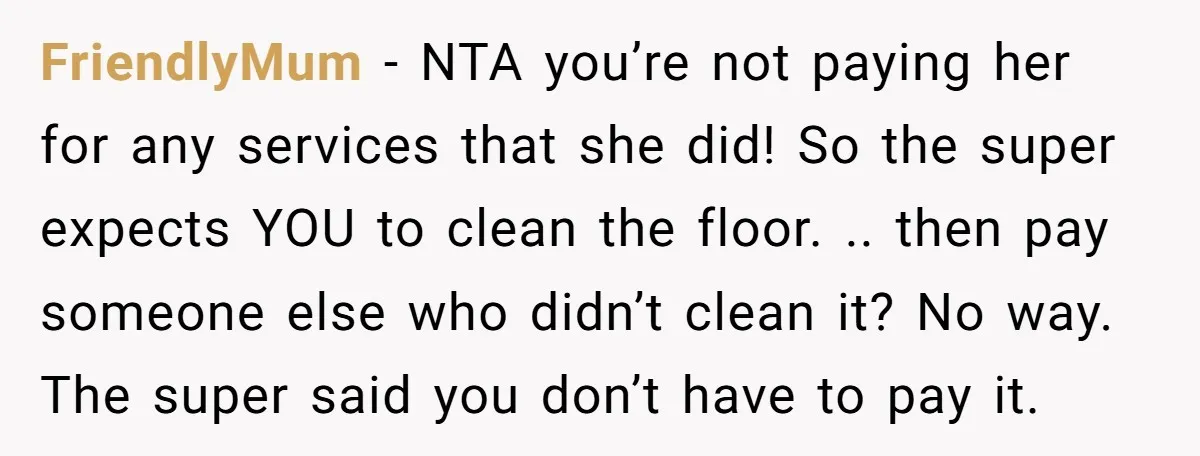
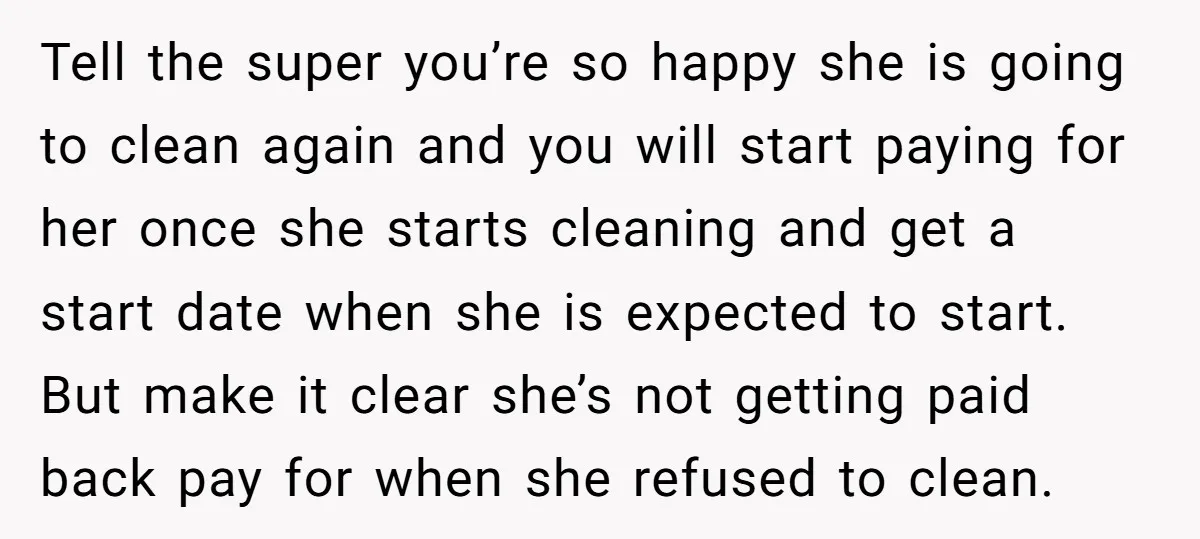
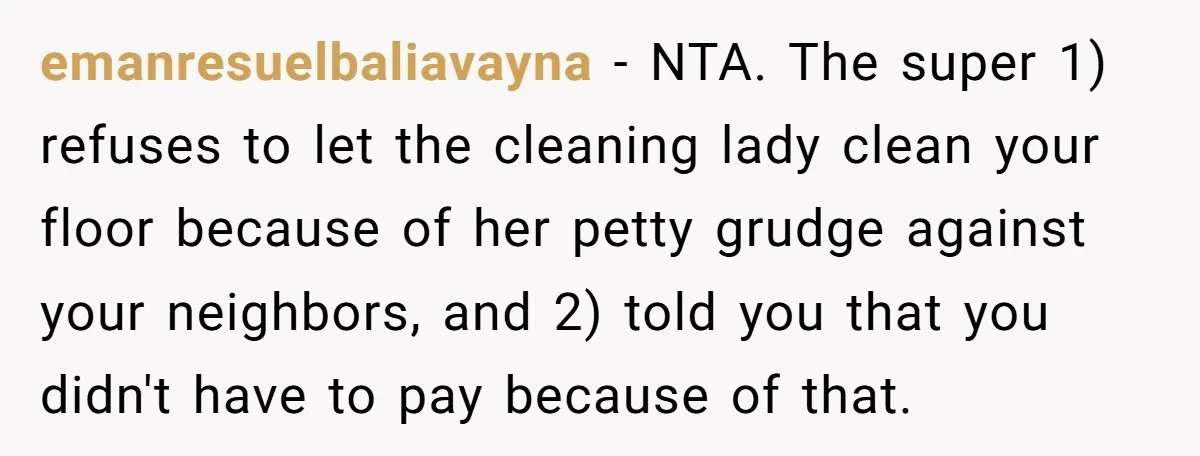
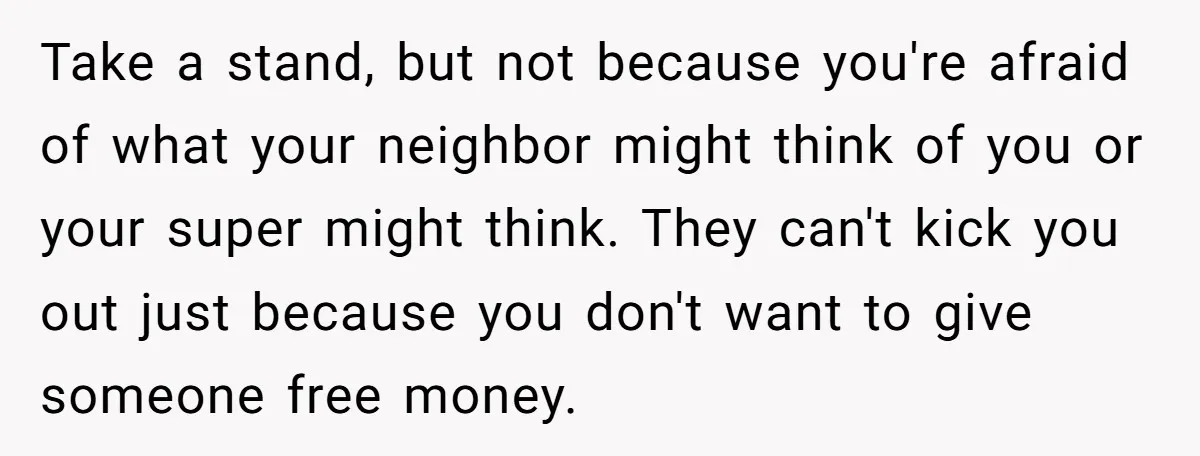
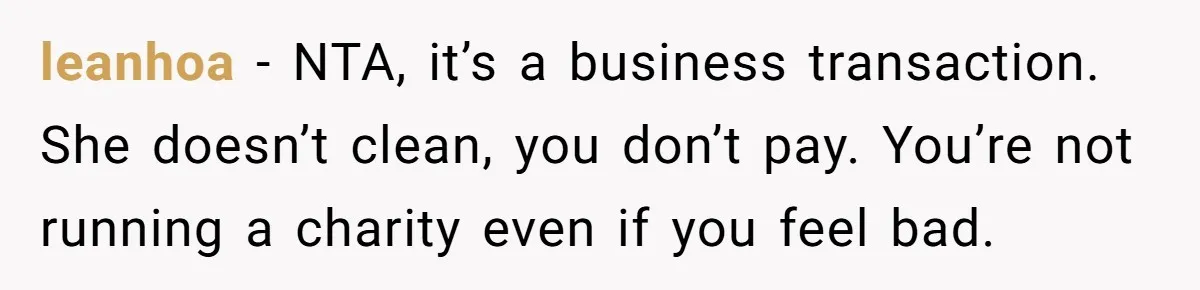
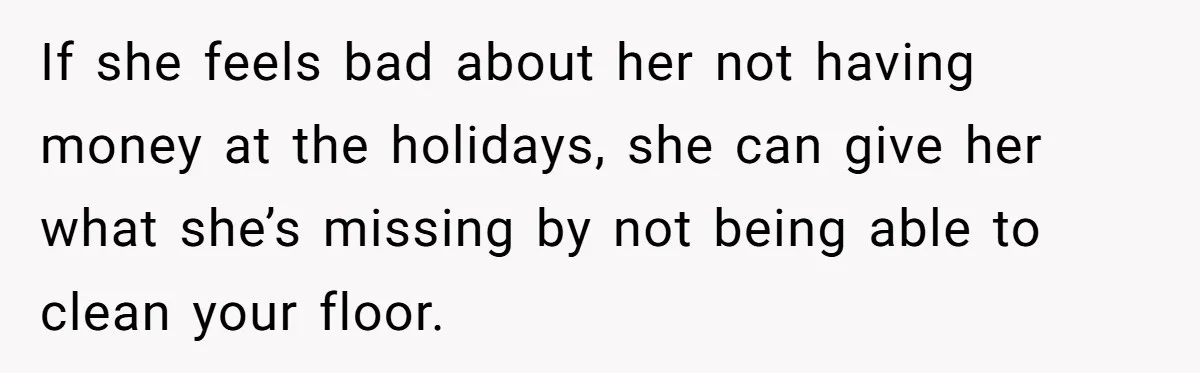
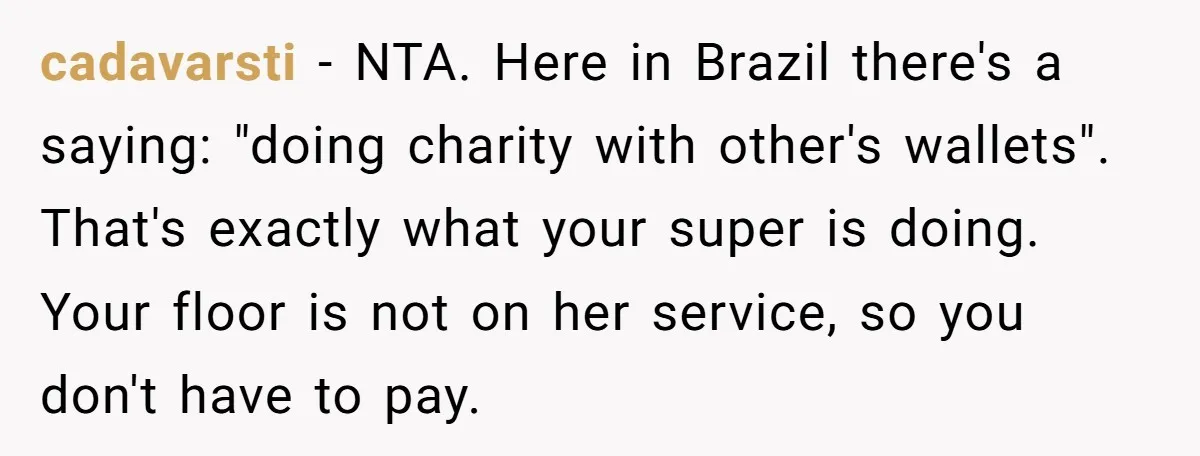
Many users supported the tenant, saying payment for work never performed makes little sense.
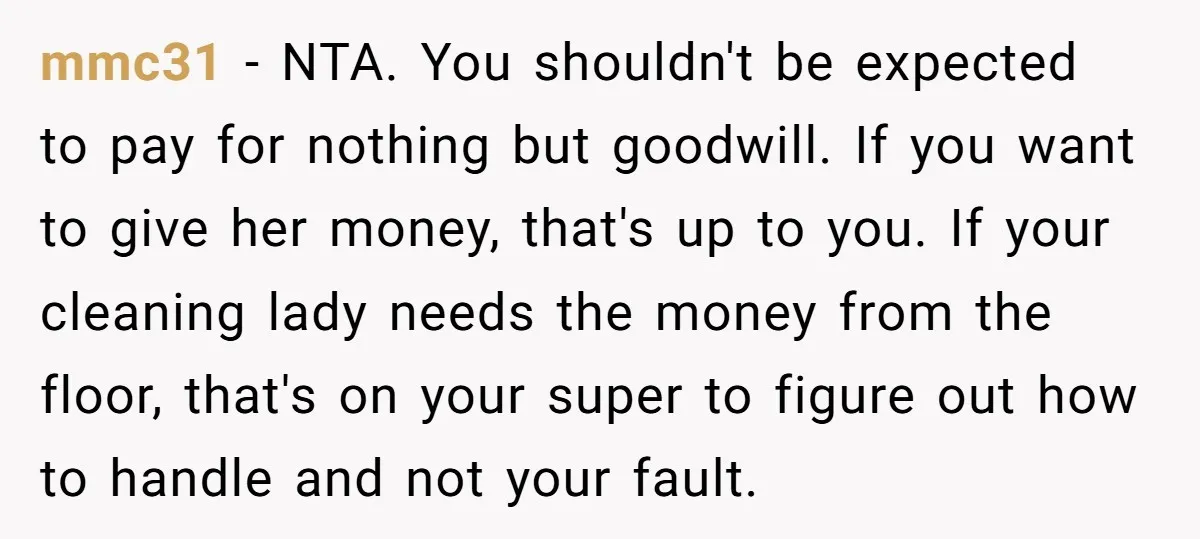
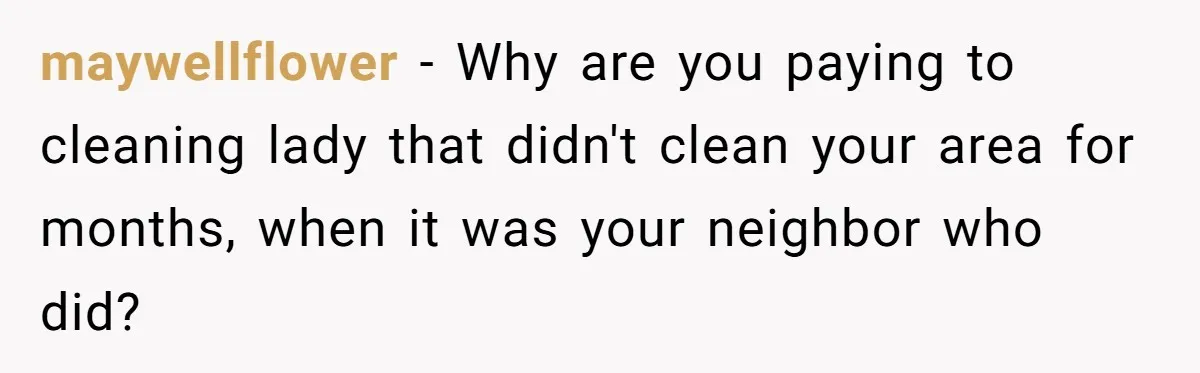
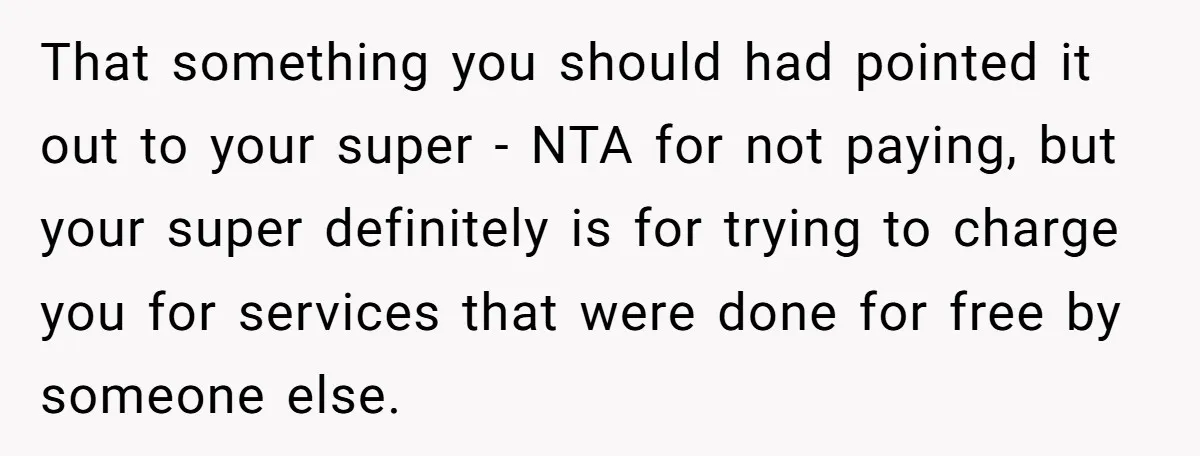

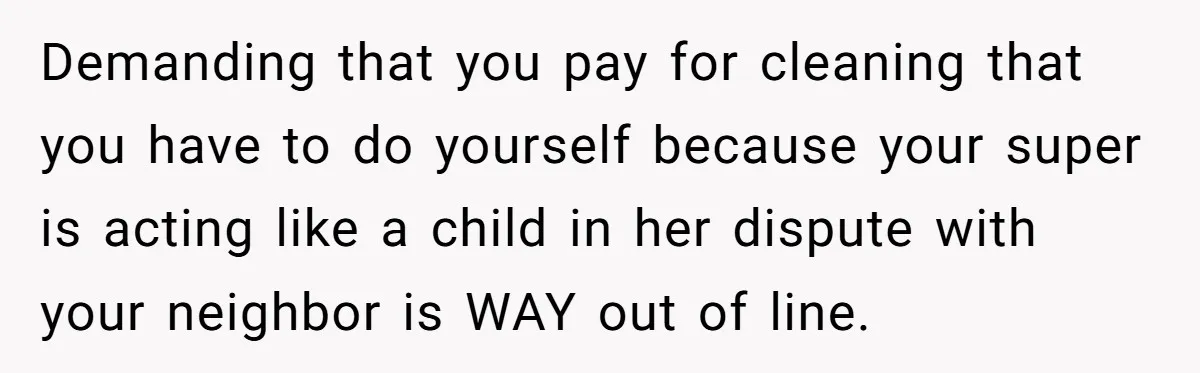
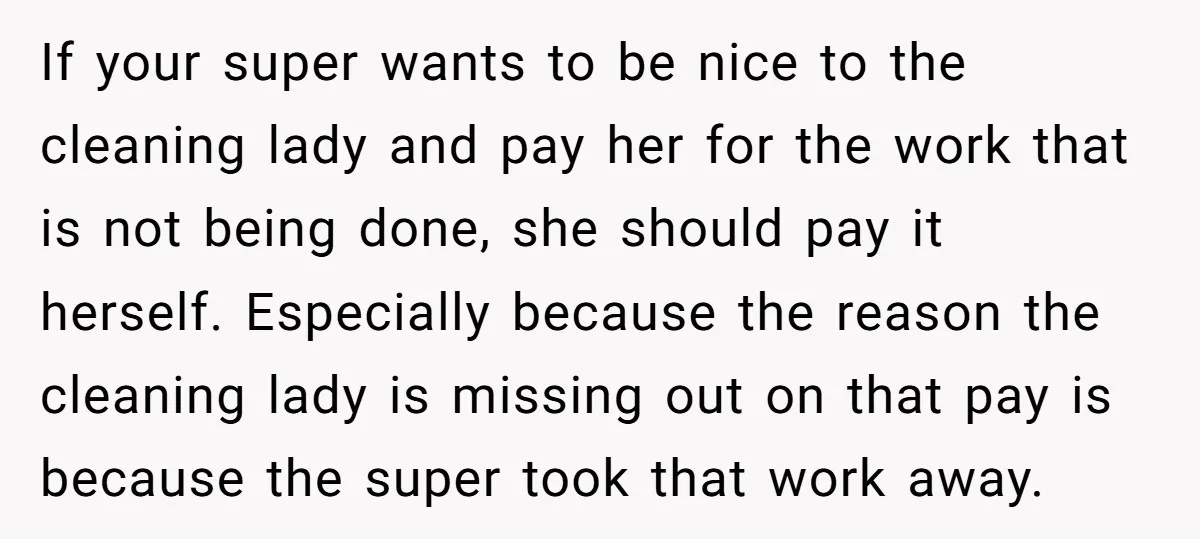
Some commenters offered more balanced takes and asked questions about agreements or contracts.

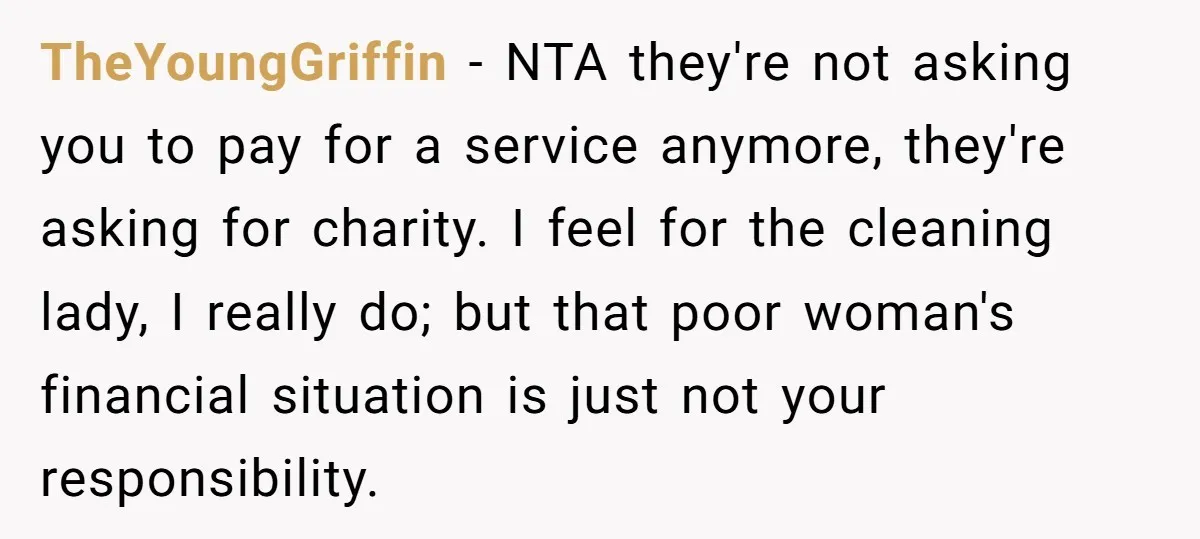
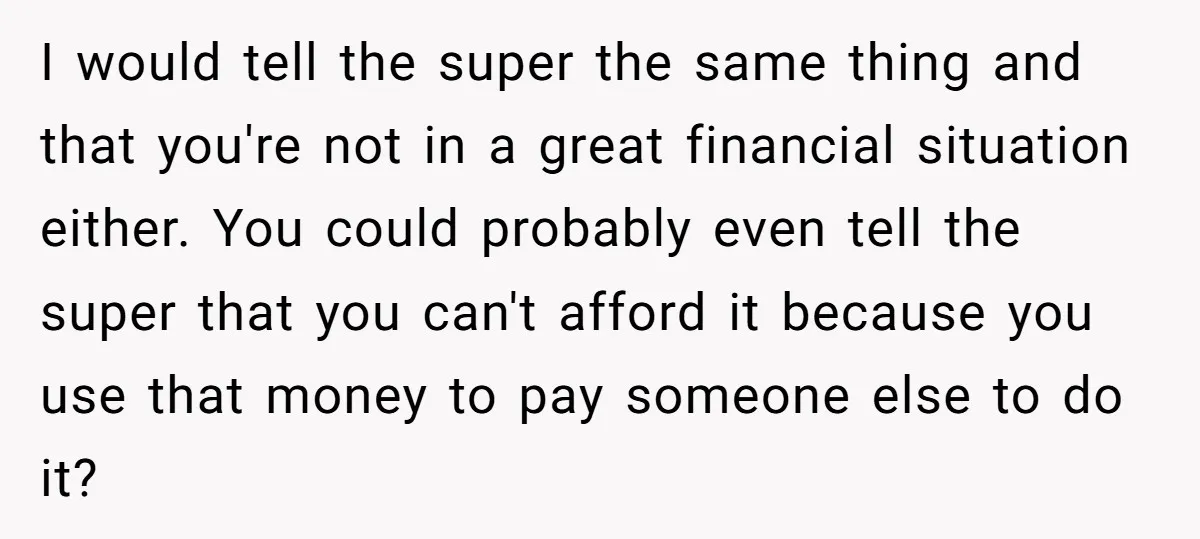
Others tried to lighten the mood with humorous remarks about building politics.
The tenant’s situation shows how quickly a simple service arrangement can turn into a complicated social conflict. On one hand, refusing to pay for work that was never performed seems reasonable. On the other, sympathy for an elderly worker and pressure from neighbors can make the decision feel emotionally heavy.
The bigger question may be about responsibility and fairness within shared living spaces. Should residents feel obligated to cover costs when management decisions interrupt services? And when community pressure becomes intense, how should someone balance compassion with their own financial limits? What would you do in the tenant’s position?